Solitaire Dreams
- 4.4
- Rating
- 500.00K
- Installs
- Free
- Price

 Analysis by App-foxy
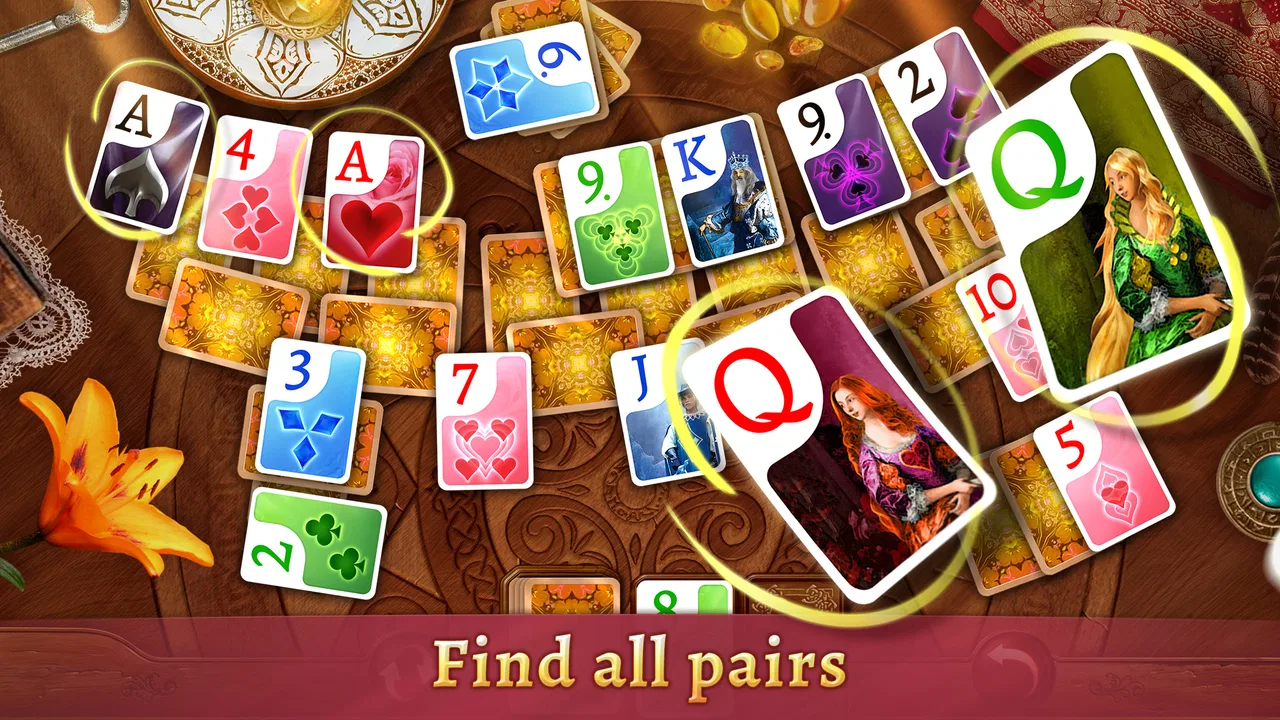
I spent time with Solitaire Dreams as a quiet, card-based puzzle rather than a game I would open for fast competition. It is built around Mahjong solitaire: you clear the board by matching identical cards, looking for a legal pair while planning which cards to uncover next. That simple rule makes the first few rounds easy to understand, but the real appeal appears when a careless match blocks the only useful route forward.
My first impression was that this is best treated as a small mental break. It fits the moments when I want something more involved than scrolling, but less demanding than a strategy game with a long campaign. The presentation and structure make it approachable for casual players, while the need to read the layout gives it enough thought to avoid feeling like pure tapping.
How the current version feels to play
Orchid Games presents Solitaire Dreams as a free card game for everyone, and that description is accurate in practical terms. The game is easy to pick up without learning a complicated ruleset. I can start a board, scan the visible cards, and immediately understand the basic objective. The challenge comes from deciding whether a matching pair is useful now or whether leaving it in place will open a better sequence later.
You May Also Like

 Blood Strike: 2.5 Anniversary
Blood Strike’s Loadouts Turn Every Drop Into a Tactical Gamble
A close look at Blood Strike’s custom loadouts: how fast access to signature weapons reshapes its battle royale rhythm, rewards preparation, and narrows the gap between fights.

 Pandora - Music & Podcasts
Pandora’s Music Is Easy to Start, but Harder to Recover
Pandora’s strength is its low-effort path from a seed to a station. Its weak spot is how much confidence it asks you to place in connection, setup, and quiet recovery.

 8 Ball Pool
 Is Built on Rivalries, Rematches, and Routine
A close look at the rivalries, rematches, shared routines, and unanswered safety questions that turn a quick pool match into a persistent mobile community.

 Samsung Music
’s Quiet Strength Is Playing What You Already Own
Its reach comes less from spectacle than from dependable access to a personal library. That simplicity is both the app’s strongest retention engine and its ceiling.

 AccuWeather: Weather Radar
AccuWeather Review: A Quick, Clear Forecast for Everyday Decisions
For everyday plans, the best forecast is the one you can understand quickly. AccuWeather makes rain timing, radar, and local conditions easy to act on, with a few trade-offs.

 Hill Climb Racing
Why Hill Climb Racing Still Turns Crashes Into One More Run
A tiny car, a bumpy hill and one more upgrade: Hill Climb Racing keeps resurfacing because its simple chaos makes every near-miss feel personal.
More From Our News Desk



That distinction matters. A pair can be available but strategically inconvenient. Removing it may expose a card that has no partner yet, while another move could uncover several useful options. I found myself slowing down after the introductory familiarity wore off, especially when several matches looked equally attractive. The game rewards attention to the whole arrangement rather than reflexes.
The current release is version 4.35.0, which gives the game a well-established feel rather than that of a brand-new experiment. It was released on February 17, 2016, and its continued presence suggests that the basic format has remained useful over time. I would not approach it expecting a radically modern card battler; I would approach it as a mature solitaire-style experience that has had time to settle into its identity.
For a short everyday session, the format works well. Imagine waiting for an appointment with ten minutes to spare. I can open a board, make progress without needing sound, and stop when the appointment arrives. There is no requirement to remember a story or coordinate with other players. That makes it more convenient than many games that punish interruptions.
The thinking behind each match
The most valuable habit I developed was checking the board in layers. Instead of matching the first pair I noticed, I looked for cards that were covering other cards or limiting access to a section. A match that removes a blockage can be worth more than one that merely reduces the visible count. This is not an advertised trick so much as the natural strategy that emerges from the layout, and it gives the game more depth than its basic rule suggests.
I also learned to pause before committing when a pair was easy to spot. In a Mahjong solitaire arrangement, visibility is not the same as usefulness. If I clear a pair too early, I may expose an awkward card while leaving a more important route untouched. Taking a few seconds to compare possible moves usually produces a cleaner board and makes the session feel deliberate rather than random.
That makes Solitaire Dreams a reasonable choice for players who enjoy pattern recognition and light planning. It is not the right fit if you want a card game based on bluffing, deck construction, or direct competition. There is no appeal here for someone who mainly wants to defeat another player, build a collection, or follow a dramatic campaign. Its pleasure comes from solving the arrangement in front of me.
What the long-term numbers suggest
The game has an average rating of 4.4 from around 14 thousand ratings, and it has passed 500 thousand installs. Those figures do not tell me whether every player will enjoy the pacing, but they do indicate that the format has found a substantial casual audience. I see why: the rules are familiar enough for a broad age range, yet the board can still demand careful choices.
The Everyone content rating also makes it easier to recommend within a family setting. I would still let each person decide whether the monetization style suits them, but the game itself is positioned as accessible rather than mature or intense. Its free entry point lowers the effort needed to test it, which is useful when someone is unsure whether Mahjong solitaire will hold their attention.
One important detail is the in-app purchase range, which runs from $0.99 to $99.99 per item. That does not automatically make the game unsuitable, but it does mean I would treat optional purchases carefully. A free download is convenient for trying the core experience, while the presence of high-priced individual items is a reason to avoid tapping through purchase prompts casually. I would recommend checking what an item does before confirming anything.
How the experience has evolved
The version history context is useful here, even without turning the review into a list of updates. A product that has reached version 4.35.0 is not frozen at its original launch state. For existing players, that generally means the app has had opportunities to refine its presentation and keep its underlying experience usable across changing devices and expectations. I would describe the evolution as maintenance and continuation rather than assume a particular new feature.
That distinction is important because I would not promise a specific improvement unless it is visible in the current play experience. The strongest evidence is the game’s present identity: it remains a straightforward Mahjong solitaire title from Orchid Games, with a free model and a broad audience. Anyone returning after time away should expect the familiar matching foundation, not a completely different genre.
For a new player, this maturity is reassuring in one way. The rules do not feel experimental, and the game is easy to test without paying at the start. For a returning player, the trade-off is that familiarity may be the main attraction. If you were hoping for a major reinvention, the current version may feel more like a polished continuation than a fresh beginning.
I would also separate confirmed product facts from future expectations. The release date and current version show a long-running app, but they do not guarantee how frequently the developer will change the game next. I would judge it on the board design and session quality available now, not on imagined future systems. That keeps expectations realistic and makes the recommendation fairer.
Who benefits most from the design
Solitaire Dreams works particularly well for three kinds of players. First, it suits beginners who want a card puzzle with an immediately understandable goal. Second, it fits experienced solitaire fans who prefer arranging and clearing rather than competing. Third, it is useful for people who want a repeatable activity that can be paused between ordinary tasks.
I can also see it helping someone who enjoys low-pressure concentration. The board asks me to observe, compare, and plan, but it does not demand the constant attention of a real-time game. That makes it a better companion for a quiet break than for a crowded commute where I might lose focus every few seconds. The game is calm, but the best moves still require enough attention to keep it from becoming background noise.
Players who dislike optional spending should approach with a clear boundary. I would play the free portion first, disable or protect purchases where appropriate on the device, and decide whether the available experience is satisfying without buying anything. Players who want a completely purchase-free environment may prefer a paid alternative, even if its initial cost is less convenient.
Practical tactics that improve a session
I found three small techniques more useful than simply playing faster. The first is to scan for constrained cards: pieces with fewer possible routes or cards that sit in a position where removing them could open several others. The second is to avoid spending every obvious match immediately; keeping options visible can be more valuable than reducing the board at once. The third is to use a short mental reset after a mistake rather than tapping randomly. Once the board becomes confusing, a fresh scan often reveals a better line.
These habits also explain why the game can feel different from ordinary matching puzzles. In a basic match-three title, the board often encourages rapid reactions and chain effects. Here, I am mainly managing access and future choices. Compared with traditional solitaire, the focus is not arranging a deck into suits and sequences. Compared with competitive card games, there is no opponent to read. The closest comparison is a visual logic puzzle presented through familiar card imagery.
That comparison also reveals a limitation. If you need a strong sense of progression, social interaction, or changing rules, the core loop may become repetitive. The pleasure depends on enjoying new layouts and the small satisfaction of solving them. I would not recommend it to someone who needs constant novelty, narrative rewards, or a clear multiplayer ladder to stay engaged.
Where the experience still has limits
The free price is an excellent reason to try the game, but it also changes how I evaluate it. A free card game can be easy to download and sample, yet optional purchases may become part of the surrounding experience. Because the purchase range extends from $0.99 to $99.99 per item, I would not treat every visible offer as harmless decoration. The sensible approach is to play first, understand what is actually necessary, and spend only with a deliberate reason.
Another limitation is the narrowness of the central activity. Mahjong solitaire is the whole point, and that focus is either a strength or a weakness depending on taste. I appreciate not being pushed into a complicated system, but I also know that some players will finish a few sessions and want more variety. If you usually rotate between puzzles, stories, and competitive modes, this game may work better as one small option on your phone than as your only game.
The age rating of Everyone makes the app broadly approachable, but broad accessibility does not mean universal appeal. A child may understand matching quickly, while an adult may enjoy the planning angle. Still, anyone who finds repeated visual scanning tiring could lose interest. I would especially skip it if I wanted a game that teaches a substantial skill, offers a rich narrative, or creates memorable player-versus-player moments.
Device compatibility is also worth checking before installation. The listed minimum operating system is Android 5.1, so the game is positioned to support older Android devices as well as newer ones. That is helpful for people using an older phone, although actual comfort will still depend on the screen and general device condition. A compact display may make crowded arrangements harder to inspect, which is a practical concern for a visual puzzle.
How it compares with familiar alternatives
Against classic solitaire apps, this game is more about spatial awareness than card sequencing. If you enjoy deciding which foundation pile to build or managing a hidden stock, a conventional Klondike-style app may give you more variety in decision-making. Solitaire Dreams is better when I want to look at one arrangement and solve the access problem inside it.
Against Mahjong apps with a more elaborate presentation, its appeal is likely to be the directness of the card-pair format. I do not need to treat it like a collection game or learn a large ruleset before making progress. The downside is that players seeking a deep progression system may find a specialized alternative more rewarding.
Against free puzzle games with aggressive pacing, this is the calmer choice. I can think through a board instead of chasing a timer or reacting to a stream of changes. The trade-off is lower excitement. In my view, that makes it ideal for a break, a waiting room, or a wind-down routine, but less suitable for a gaming session where I want energy and surprise.
My recommendation after using it
I recommend Solitaire Dreams to anyone who likes quiet card puzzles, especially if matching pairs and planning several moves ahead sounds relaxing rather than repetitive. Its free entry, Everyone rating, and simple starting rules make it easy to test. The game’s long-running presence and current version also suggest a stable identity: it knows what kind of experience it wants to provide.
I would recommend approaching it with two expectations. First, the satisfaction comes from solving layouts, not from a story or competitive community. Second, the free download should be treated as an invitation to try, not as a reason to make immediate purchases. The optional item range deserves attention, particularly for families or anyone sharing a device.
My favorite way to use it is in short, focused sessions. I choose it when I want to exercise visual attention lightly, fill a few spare minutes, or switch off from a busier game. I would choose a traditional solitaire app for more classic card mechanics, a competitive card game for social tension, and a richer puzzle title for long-term variety.
Overall, Solitaire Dreams is a focused Mahjong solitaire game with a clear audience and a pleasantly low barrier to entry. It does not need to pretend to be more than that. Its strongest quality is the small strategic layer hidden inside matching pairs: the best move is often the one that improves the next move. Its main weakness is the same focus that gives it clarity, since players wanting broader content may soon look elsewhere.
If that trade-off sounds right for you, I think it is worth trying as a free, everyday card puzzle. Play slowly enough to read the board, keep purchases intentional, and judge it by whether its quiet rhythm fits your routine. For me, it succeeds as a dependable mental pause rather than an all-purpose game, and that is a useful role when a phone needs something simple but not mindless.
FAQs for Solitaire Dreams
01What is Solitaire Dreams, and how is the game played?
Solitaire Dreams is a casual card game built around classic solitaire-style gameplay, combined with a light adventure or progression system. You generally clear card layouts by arranging cards according to traditional solitaire rules, while completing levels, unlocking new stages, and improving themed locations. It is designed to be easy to learn, although later layouts may require careful planning and a little luck.
02Can I play Solitaire Dreams without an internet connection?
Some parts of Solitaire Dreams may be available offline, particularly previously loaded solitaire levels, but the full experience can depend on an internet connection. Online access may be required for advertisements, cloud synchronization, special events, updates, leaderboards, or purchases. If you plan to play while traveling, it is best to open the game beforehand and check which features remain available without connectivity.
03Does Solitaire Dreams contain advertisements or in-app purchases?
Solitaire Dreams is typically free to download, but free gameplay may be supported by advertisements and optional in-app purchases. Depending on the version and platform, purchases can provide coins, boosters, extra lives, ad removal, or other convenience features. You can usually progress without spending money, although some difficult levels may encourage the use of additional resources.
04Is Solitaire Dreams suitable for children and casual players?
The basic solitaire mechanics are simple enough for many casual players, including people who are new to card games. However, suitability for children depends on the age rating, advertising content, purchase settings, and any social or online features included in the current version. Parents should review the store listing and enable purchase restrictions before allowing younger players to use the app.
05What should I check before downloading Solitaire Dreams?
Before downloading Solitaire Dreams, check that your Android or iOS device meets the listed system requirements and has enough free storage for the installation and future updates. Also review the latest user ratings, privacy information, permissions, subscription or purchase details, and whether progress can be synchronized between devices. Availability of certain features may vary by region and app version.
Pros
- Relaxing solitaire gameplay suitable for short sessions.
- Dream-themed visuals create a pleasant
- calming atmosphere.
- Simple controls make it accessible for new players.
- Different challenges help keep the classic format engaging.
- Playable at your own pace without requiring fast reactions.
Cons
- Some features may be limited unless you spend in-game currency.
- Progress can feel slow when rewards become harder to earn.
- Repeated card layouts may reduce variety over longer sessions.
- Ads may interrupt gameplay
- depending on the version installed.
- Requires an internet connection for some events or features.

Solitaire Dreams
Gallery